
News & Insights
Our team regularly shares insights on market developments, regulatory considerations, and broader financial themes. These perspectives reflect our experience and our commitment to staying informed in a changing environment.


The Investment Decisions We Make by Doing Nothing
A financial review can be easy to postpone when work, family responsibilities and immediate bills...

What Happens After a Trade? In Conversation with Chris Holmes
A trade may take seconds to execute, but making sure it completes properly is a different matter....

What Does Seniority Protect in a Private Equity Capital Structure?
Private credit lenders have moved decisively towards the senior end of the capital structure. Res...

Can Conviction Survive Without Becoming Confirmation Bias?
Conviction is an investment virtue. It allows an investor to act against the consensus, tolerate ...

Can an Index Change an Investment Without Changing the Company?
A company's revenues do not change because it enters an index. Neither do its factories, employee...

Can Financial Markets Put a Price on Central Bank Independence?
Central bank independence can sound like a constitutional or political question. For financial ma...

Rising National Debt Is Changing the Investment Landscape
Government debt is usually discussed as a question of public finances. How much is a country borr...

In Conversation with John Gunn: Relationships, Regulation and the Changing Shape of Global Markets
When we last interviewed John Gunn, Chairman and Founder of Global Investment Strategy, he reflec...

Why Does Patient Capital Find It So Difficult to Be Patient?
Long-term investors may measure their horizons in decades, but performance can be measured every ...

Do Longer Trading Hours Create Better Markets?
Financial markets have spent decades becoming faster, cheaper and more accessible. The next front...

Can Markets Function Without Uncertainty?
For most investors, uncertainty is something to be reduced wherever possible. Research seeks to a...

Does Faster Settlement Really Mean Less Risk?
For most investors, the point at which a securities trade settles attracts little attention. The ...

Introducing the New Global Investment Strategy UK Website
For us, it was the people behind the business. Their experience, the way they work with clients ...

Who Tests the Investment Case Between Earnings Reports?
Earnings reports attract attention because they appear to offer certainty, even though the busine...

Has the Cost of Capital Changed Permanently?
After more than a decade of ultra-low interest rates, investors are increasingly asking whether c...

Should Governments Influence How We Invest?
For decades, governments have used tax policy to encourage certain financial behaviours. Pension ...

What Happens When Central Banks Stop Giving Markets Clues?
For much of the past two decades, investors have become accustomed to central banks communicating...

London’s Next Act: Why Global Wealth Still Finds Its Way Back
For much of the past decade, commentary on London has drifted between two extremes. One side argu...

If Everyone Is Optimising, Who Finds The Next Opportunity?
For decades, the investment industry has pursued a remarkably simple objective: build a better po...

Are Public Market Investors Missing Out on the Next Generation of Growth?
For decades, public markets were the primary arena in which investors accessed the scaling phase ...
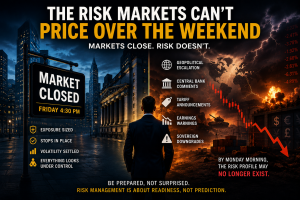
The Risk Markets Can’t Price Over the Weekend
By Friday afternoon, most investment positions feel under control. Stops are in place, exposure h...

Is This the End of “Set and Forget” Investment?
UK investors are quietly reassessing long-term investing, not because the principles have failed,...
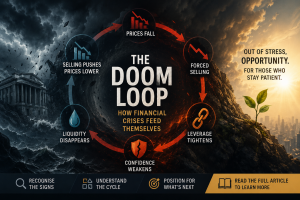
The Financial Doom Loop: Why Market Stress Can Become Self-Reinforcing
Most investors do not notice a doom loop when it begins. At first, it just looks like volatility,...

When the Numbers Move: Are Markets a Better Barometer Than Official Statistics?
Official economic data is meant to give investors, policymakers and the public a shared view of r...

Five Years On, GameStop Wasn’t a Glitch. It Was a Warning.
The GameStop saga was more than a meme-stock frenzy. It was a live stress test of market structur...

Expectation Arbitrage: The Real Edge in Today’s Markets
Many investors correctly identify the next big trend. Far fewer profit from it. Being directiona...

Liquid Access to Illiquid Markets: Innovation, or an Illusion?
Everyone wants liquid access to private markets, but few are asking what happens when that liquid...

British Steel and the New Rules of State Intervention
This isn’t just a potential bailout, it’s a signal. At first glance, the UK governme...

From Oil to Everything: Understanding Market Transmission in a Fragmenting Macro Regime
Markets do not reprice in response to events. They reprice because of how those events propagate ...

Cash Is Back. But Is It Quietly Losing Value?
Investors are moving back into cash at the fastest pace since the pandemic - a sharp and telling ...

Why Oil Still Dominates the Global Economy
Markets often treat energy as just another commodity when in reality; it is something far more fu...

Markets as Ecosystems: What Evolution and Swarm Behaviour Reveal About Alpha and Crowded Trades
Financial markets are often described as machines governed by models, equilibrium and rational ex...

Commodities Are Moving Again: Cyclical Bounce or the Early Stages of Something Bigger?
After several quiet years, commodities are stirring with intent. The Bloomberg Commodity Index h...

If Markets Get It Right in the End… Why Are We So Obsessed With Explaining Them?
There’s a comforting phrase investors like to repeat: “Markets get it right in the en...

The 100-Year AI Bet: Visionary Capital Allocation or Late-Cycle Excess?
When a company issues a 100-year bond, it isn’t just raising capital; it is making a statem...

Filofax to Fintech: The Evolution of UK Markets and the Investors Who Navigate Them
The markets may look familiar, but the rules you grew up with? Most no longer apply. In the 1980...
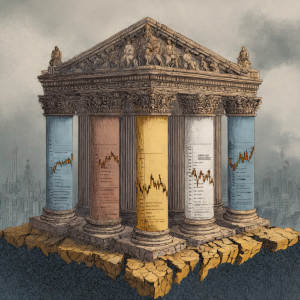
Equity Markets Run on Trust, not Confidence
If you’ve been investing for a while, this probably won’t sound radical: equity marke...

The UK Options Market: A Conservative Strategy in a Speculator’s Wrapper
In many UK investor circles, “derivatives” still carry an image problem. For too long...

Investing with Memory, Not Luggage: Why the Past Should Inform, Not Inhibit
Every seasoned investor has scars - some wear them like medals, while others let them dictate eve...

Knowing Better, Doing It Anyway: The Hidden Cost of Following the Crowd
In investing, intelligence isn’t in short supply. Most professional investors have the tool...

This Has All Happened Before: Why Investors Keep Forgetting Structural Change
Supermarkets, the internet, and AI, disruption isn’t new, but investor memory often is. Eve...

What Cocoa Prices Reveal About How Commodities Really Work
Cocoa prices may have cooled this festive season, but behind the drop lies a more complex market ...

Why British Cycling’s Spin-Off Signals a Broader Shift in Alternative Investing
When British Cycling quietly announced it would demerge its commercial unit, and open the doors t...

Inflation: Real Progress or Repackaged Pressure?
Headline inflation in the UK is trending down, and the headlines are celebrating. But beneath the...

Regulate or Restrain? Balancing Innovation and Investor Protection in Modern Markets
Every market shock seems to revive the same post-mortem: where were the regulators? Yet as innov...

Have We Gone Too Far? US Financial Power and the West’s Growing Economic Dependence
In global economic circles, one question keeps returning with greater urgency: Has the United Sta...

Access with Intent: How HNWIs Use Technical Instruments to Master Equity Market Exposure
For seasoned investors, equity markets are no longer about simply “buying the index”....

The Penny Drops, But Should Cash Disappear Too?
As the US retires the one-cent coin (the penny), the UK faces a familiar question: is small chang...

When AI Ambition Becomes Excess: Are Big Tech’s Cash Flows Being Pushed Too Far?
For the past 18 months, capital markets have rewarded companies that leaned hardest into artifici...

The FCA’s Short Selling Overhaul: Progress or Pitfall?
The Financial Conduct Authority (FCA) has just unveiled a landmark overhaul of short-selling rule...

From Resilience to Reliance: Are Politicians Now the Last Line of Defence in a Tech-Driven Economy?
In an age of hyper connectivity, the nature of economic risk is shifting, and fast. Gone are the ...

The 70% Rule: The Decision-Making Edge of the World’s Smartest Investors
Every investor wants to make smart, informed decisions, but in a world of infinite data and limit...

Is AI a Fad or a Structural Shift? What UK Investors Should Be Watchin
The buzz around artificial intelligence is deafening - from FTSE boardrooms to boutique wealth de...

Why Contrarian Investing Works: Profit in the Places Others Fear to Look
In a world where crowd sentiment can swing markets with a tweet, the appeal of contrarian investi...

Crypto Passporting: Could the US-UK Task Force Unlock a New Era for Digital Assets?
As Adrienne Harris steps down as head of New York’s Department of Financial Services (DFS),...

Private Credit 2.0: Why UK Allocators Are Entering a New Era of Yield and Innovation
The post-2020 investment landscape has rewritten the rules for income, risk, and liquidity. For U...

Echoes of 2008? Tricolor’s Collapse and the Uncomfortable Parallels to Subprime Mortgages
When Tricolor Holdings, a subprime auto lender in the US, collapsed into bankruptcy this Septembe...

Semi-Transparent ETFs: A Quiet Revolution or Another Damp Squib?
For decades, ETFs have built their reputation on one defining trait: daily transparency. Investor...

Britain’s Borrowing Bind: Why Gilt Yields Refuse to Fall
The UK now holds the uncomfortable distinction of having the highest long-term borrowing costs am...

Half of Gen X Faces a Pension Squeeze, and Women Fare the Worst
For Generation X, retirement planning has often been described as a squeeze, and with good reason...

Mind Over Market: How Traders Maintain Discipline in Challenging Times
Markets have a way of testing more than just strategies (as many traders can testify). They test ...

UK Trading in 2025: Adapt or Get Left Behind
A trader in 2020 could have made a killing riding the wave of meme stocks. The market was buzzing...

European Banks: From Crisis Survivors to Market Leaders
European bank shares have hit their highest levels since 2008 - a milestone that reflects more th...

The 18-Year Investment Cycle: Are We Approaching the Next Shock?
In the vast, noisy world of market predictions, few frameworks have persisted as stubbornly - and...

Unleashing Animal Spirits or Lighting the Fuse?
When UK Chancellor Rachel Reeves declared regulation a “boot on the neck of businesses&rdqu...

The Wealth Tax Debate: Britain’s High-Wire Act Between Fairness and Flight
The prospect of a UK wealth tax has once again ignited debate across boardrooms, investment house...

The Brutality of Markets: Tears, Weakness, and the Price of Blind Spots.
Politics can be bruising, but that's nothing compared to financial markets, which are downrig...

Tradition Meets Transformation: Investing the British Way in 2025
For generations, the UK investment community has stood on bedrock principles: prudence, diversifi...

PISCES: Can Private Markets Go Public Without the Pitfalls?
The UK's capital markets are entering uncharted waters with a new system for private companie...

How Quantum Networks Will Redefine Low Latency Execution by 2030
In the world of institutional investing, speed has always been the sharpest edge. From co-locatio...

The Confidence Game: Why Markets Break When Trust Disappears
It’s easy to think markets move on data: earnings, GDP, inflation prints, etc. However, if ...

Data: The Rising Asset of the Modern Age
For much of the 20th century, corporate power was measured in barrels of oil, tons of steel, or m...

Markets Don’t Trade Stocks – They Trade Perception
We often think of markets as engines of capital but in truth, they function far more like engines...

Why Smart Investors Don’t Let the Tax Tail Wag the Investment Dog
Every investor hits that moment, usually after a healthy gain or a chat with a tax-savvy friend, ...

Fast Thinking, Long Cycles: The Illusion of a Shortened Investment Horizon
In today’s always-on financial world, it’s easy to believe that investment cycles are...

Banking’s Digital Dilemma: The Hidden Risks Behind the Rush to Automate
In 2025, a three-day outage at Barclays served as a stark reminder of how dependent financial ins...

Succession Planning: Why It’s Now a Wealth Management Priority
In an era where markets move fast, and geopolitical risks loom large, one long-term force is resh...

Pigeons to Picoseconds: The Relentless Race to Zero Latency in Financial Markets
Prior to the 1900s, the most competitive trading edge might have been a carrier pigeon. Fast-forw...

Global Plays to Cash Stays: The Era of Investment Whiplash
Open any financial newsfeed in 2025; the story will change by the hour. On Monday, global headlin...

UK Capital Gains at a Crossroads: Growth Engine or Fiscal Gamble?
Donald Trump’s push to scrap the capital gains tax raises deeper questions about fa...

When More Becomes Too Much: Rethinking How Investors Engage with Information
The paradox of modern investing is that never before have markets been more transparent, data mor...

The Return of Cash: How UK Investors Are Rethinking Liquidity.
For over a decade, cash in portfolios was treated as an afterthought. Long seen as a necessary so...

UK Machines Gone Wild: How AI, HFT, and Big Data Fuel Market Chaos
For years, we were told that technology would make financial markets more efficient. AI would pre...

If Diversification is Central to Investment, Why Not Regulation?
Financial markets thrive on diversification. Investors spread risk across asset classes, sectors,...

The Original Investment Gurus: Pioneers Who Shaped the Markets Centuries Ago
Investing isn’t just a modern game played by Wall Street elites; it has been around for cen...

Long-Term Asset Funds: Unlocking Private Markets for UK Professional Investors
In recent years, high-net-worth individuals (HNWIs) and professional investors in the UK have inc...

The History of Inflation: From Ancient Rome to Modern Times
Inflation, the rise in prices over time, has shaped economies for centuries but is still a myster...

The World’s View on UK Investment Quirks: A Help or Hindrance to Wealth?
The UK investment market has long been an enigma to global investors. With its deep-rooted tradit...

Is Day Trading the Solution to a Better Work-Life Balance?
For years, the term "day trader" has been synonymous with stress - images of frantic in...

Are Clearing Services the Unsung Heroes of Investment Market Efficiency?
In the bustling world of investment markets, the spotlight often shines on dramatic stock surges,...

Share Buybacks: Triggers, Benefits, and Historical Success
Share buybacks, also known as share repurchases, occur when a company buys back its own shares fr...

Is the Future of Fossil Fuels in Portfolios Already Dead or Just Evolving?
The push for ESG (Environmental, Social, and Governance) investments has triggered mass divestmen...

Fractional Property Investment: The UK’s New Real Estate Revolution
The UK property market has long been seen as the domain of the wealthy, with skyrocketing house p...

How FinTech is Transforming Wealth Management in the UK
Wealth management, once the domain of traditional financial advisers and elite institutions, is u...

Can the UK Rewrite the Rulebook on ESG Ratings?
The UK is positioning itself at the forefront of sustainable finance in a world increasingly driv...

Private Credit: The Unseen Engine Driving Portfolio Diversification in Europe
Private credit has emerged as one of modern finance's most dynamic and compelling asset class...

Back-to-Back Clearing for Seamless Global Trade Execution
Prime broking serves as a cornerstone of modern financial markets, enabling high-net-worth indivi...

How the London Stock Exchange Lost Its Shine: Lessons from a Fallen Giant
The London Stock Exchange (LSE) was once a beacon of financial power, attracting global capital a...

The Evolution and Importance of Low-Latency Execution in Trading
In the fast-paced world of financial markets, speed is everything. For traders, especially those ...

Should the Bank of England Stay Out of Politics?
The Bank of England (BoE) has long upheld a tradition of political neutrality, ensuring that its ...

The UK Economy And Unexpected Shocks
In October, the UK government introduced a sweeping set of tax increases to address budgetary sho...

The UK Government’s Escalating Debt and Its Complex Relationship with the Gilt Market
The UK’s recent increase in debt issuance has cast a spotlight on the gilt market, highligh...

The Emergence of the Professional Trader
The last few decades have seen a notable rise in professional traders worldwide. Once largely con...

How Technology Stock Valuations Shift as Companies Move from Loss to Profit
We only need to look to the US to see the enormous influence of leading technology stocks on inve...

The Fiscal Challenges Constraining UK Growth: Exploring Alternative Paths
In a challenging fiscal environment characterised by high debt and low growth, Andy Haldane, form...

Could Bitcoin become a mainstream currency?
Bitcoin, the world’s first decentralised cryptocurrency, has sparked debates since its ince...

The evolution of trade execution in the UK
Looking back over the last century, trade execution has evolved dramatically in the UK's fina...

How does stock market trading affect your brain and neuropaths?
Many traders like to feel that they are in control of their destiny and how they react to market ...

Is the Dogs of the Dow a legitimate investment strategy?
Let's be honest: The term "Dogs of the Dow" is not the most appealing, but it is a ...

How does small-cap performance compare to larger companies?
If you ask ten different people the above question, you will likely get ten different replies bec...

Balancing low-touch execution with risk management in volatile markets
In today's fast-moving financial markets, low-touch execution has emerged as a favoured strat...

What is DeFi, and how does it work?
Decentralised Finance (DeFi) is more than just a trend; it's a whole new concept which i...

UK Risk parity and its application in personal investment portfolios
For many investors, the days of the traditional 60/40 split between stocks and bonds are seen as ...

UK Leveraging Artificial Intelligence in Portfolio Management
There is no doubt that Artificial Intelligence (AI) is impacting all areas of the financial servi...

How is new money used to support the economy?
You will often hear the term "new money" when it comes to economic stimulus, but what d...

Why are trade execution regulations so crucial to investment markets?
As an investor on the outside looking in, what seems to be an ongoing raft of trade execution reg...

Unravelling the UK economy won’t be easy for the incoming Labour government
There will undoubtedly be some interesting times ahead for the new Chancellor of the Exchequer, R...

The rise of FinTech and Digital Banking in the UK
While there is constant talk about the FinTech and digital banking sectors, which have revolution...

What is behavioural finance, and how does it impact the decision-making process?
Behavioural finance is an interesting topic that differs from traditional finance theories based ...

Are politicians simply kicking the pension problem down the road?
In recent years, we have seen actual and planned changes to the state pension age that will impac...

How has investment diversification changed over the years?
When it comes to investment diversification, it's easy to assume that nothing has changed ove...

The impact of artificial intelligence on investment strategies
While financial markets are always at the forefront of new technology, artificial intelligence (A...

Understanding Prime Broking Services: A Comprehensive Overview
While the term prime broking services relates to a package of services, it can incorporate variou...

Impact Investing: Making money while doing good
The term impact investing has grown in popularity, and while more recently associated with the yo...

Latest IMF global economic forecasts
The IMF recently released an update on world economic outlook growth projections, which continued...

Is time your most valuable asset?
In the world of investment, the most valuable assets are often those right in front of you. One s...
Coutts plans to reduce UK exposure across fund range
A couple of weeks ago, markets were shocked when private bank Coutts announced plans to reduce UK...
FT report highlights gender pay gap variations
At first glance, people may wonder why the gender pay gap is so important in finance. Aside from ...
Is it time to consider emerging market debt instruments?
While US interest rate reductions may have been delayed, we will likely see some movement before ...
Why is the oil price so steady in the face of Middle East conflict?
As the tension continues to mount in the Middle East, with Israel launching what many view a toke...
Ben Bernanke’s brutally honest assessment of the Bank of England
Few expected such a brutally honest assessment when the Bank of England asked former US Federal R...
Are buffered ETFs taking over from annuities?
The Exchange Traded Fund (ETF) sector has grown significantly in recent years, allowing investors...
The danger of remaining in cash
Over the last 15 years, investors have faced several significant challenges: the financial crash ...
What did the Bank of England say about UK base rates?
The recent announcement that UK base rates will remain unchanged was no surprise to the market. H...
Are we seeing a switch from active to passive investment?
A recent report on US investment trends highlighted the growing investment in passive funds compa...
US Tech companies take advantage of ongoing market rally
The recent rally in the US stock market, with a particular focus on technology shares, has prompt...
Was there much in this week’s budget for you?
It's not easy being a Chancellor in the run-up to the next election, looking to balance a loo...
Is the FinTech sector back in favour?
As we wait for interest rates to fall in the UK, the FinTech market is back in play. The signs ar...
What does budget day hold for the UK?
As we approach the next budget, due to be announced on 6 March 2024, there is the normal degree o...
What can we learn from the US corporate bond market?
Whether looking at the US, UK or further afield, there is much concern and confusion regarding ec...
How do the authorities maintain market integrity in the UK?
Investing in stock markets worldwide has never been easier, with the introduction of the Internet...
Is it time to consider emerging market bonds?
Amid the Covid pandemic, emerging market borrowing costs went through the roof, investors sat on ...
Using derivatives for hedging, income generation, or speculative purposes
As the investment world becomes increasingly technical, you can now use option derivatives for he...
Beta figures and how to use them
Diversification is the key to long-term investment returns, with defensive exposure outperforming...
Algorithmic trading, is it ethical?
While algorithmic trading strategies have been increasing over recent years, 2024 is likely to se...
Nine interesting investment trends for 2024 and beyond
While the Internet is a hive of activity and a honey pot for research, investment trends are emer...
Why is time out of the market more costly than time in the market?
At first glance, it is easy to understand why some investors believe that time in the market duri...
Year-to-date performance of leading stock market indices
As we approach the end of 2023, it is time to look back at the last 12 months to see which stock ...
Could UK debt levels really rise to 300% of GDP by 2070?
There is intense speculation that the UK national debt could raise to 300% of GDP by 2070, as the...
Do stock markets react to different political parties in power?
It looks as though 2024 will be the year of the next election in the UK, with the Conservative go...
Market reaction to last week’s Autumn Statement
So, it's been a few days since the Autumn Statement, an opportune time to look at the market ...
Summary of the Chancellor’s Autumn Statement
When Chancellor of the Exchequer Jeremy Hunt stood at the ballot box on Wednesday, 22 November, m...
US markets intensify pressure on Europe with move to T+1 settlement
European and UK stock markets are under intense pressure, with their US counterparts already test...
UK Monetary supply, inflation and the redistribution of wealth
Over the last few years, the economic headlines have been dominated by inflation and differing ec...
Does the US junk bond market give us a glimpse of future UK trends?
Cast into the shadow for many years, the junk bond market is grabbing the headlines in the US, so...
Scottish government to investigate bond issue
The Scottish government has announced plans to investigate the potential raising of funds by a Sc...
Technical vs Fundamental analysis: Which is right for you?
As a professional investor, there are two primary investment strategies, which are technical and ...
Alternative technical indicators you may not have heard of yet
There are few industries in the world that can compare with the financial sector regarding innova...
UK government set to move on Investment Research Review recommendations
As UK and EU authorities continue to discuss ways in which their financial services sectors can w...
Did you know there were regional stock exchanges in the UK?
As the number of online traders continues to rise, many of those new to investment will be unawar...
Have you considered intergenerational wealth management?
Wealth management covers various topics such as investments, budgets, insurance, retirement and i...
Traders and Regulatory Risk: Navigating the Complex Regulatory Landscape
Online trading services have changed how we invest and encouraged a massive increase in the numbe...
How is AI impacting online trading?
There is an ongoing debate regarding the use of AI in the financial services industry. While regu...
A day in the life of a global day trader
As a day trader, you will likely have heard about the ability to trade markets literally 24/7 on ...
Could you extend your online trading skills to other areas?
We will look back in years to come and maybe more appreciate how the Internet has changed investm...
Is social media influencing online trading?
There is no doubt that the Internet impacts online trading with information readily exchanged and...
Navigating the Dynamic World of Investment Trading: Strategies and Tips for Success
Whether you are a seasoned investor or one of the many traders joining in recent times, you will ...
Risk Management for Day Traders: Protecting Profits and Capital
As a day trader, there is potential to make significant long-term returns. Indeed, many people tr...
FTSE 100 Companies and Currency Exposure
As a professional investor, it is crucial to be aware of the makeup of an index such as the FTSE ...
Changing Psychology of UK Stock Market Traders: Trends and Implications
While online trading is second nature to many investors, there is an assumption that the psycholo...
FTSE 100 or FTSE 250, which has been the better performer?
If you are an online trader, you will have come across the FTSE 100 and the FTSE 250, but are you...
The Future of UK Asset Management: Adapting to Changing Investor Demands
One of the attractions of the UK stock market is the fact that asset management and investor dema...
Building a Successful Career as a Professional Investor
While many seek to be a professional investor, what does it take? More to the point, when do you ...
The Future of Asset Management in the UK: Trends and Predictions
To many people, the term asset management is a relatively broad and static overview of investment...
Typical services offered by a wealth management company
You will often hear the term wealth management, which tends to be associated with relatively high...
6 unique traits of a day trader
While anyone can do online trading, specific personality traits are required to be a successful d...
Uncertainty surrounding the UK economy could be a day trader’s dream
Only a few days ago, the UK economy was heading for calmer waters, with interest rates supposedly...
UK authorities looking to increase the supply of capital to equity markets
When it comes to wealth management and investment, the UK has historically made up a critical ele...
How long does it take stock markets to recover from a crash?
As a day trader, it is essential to understand how stock markets work and how quickly they respon...
Are these the best seven trades of all time?
As a professional investor, looking back over history can be inspiring and unforgettable. We...
Trading psychology: An inside look
Many articles have been written about the psychology of trading, but sometimes it is interesting ...
UK History of day trading
Day trading has never been more popular, even given a boost during the Covid pande...
The daily challenges of a day trader
As a day trader/online trader, there are many common challenges faced on a daily basis. Unfo...
WealthTech – what are the benefits?
We live in a world where technology touches all areas of our financial lives, from wealth ma...
The Impact of Trade Execution on Market Liquidity and Efficiency
Trade execution is central to not only liquidity but also the efficiency of investment marke...
Low touch execution, leveraging technology
It is safe to say that trading systems worldwide have changed dramatically over the last 50 years...
The Role of Technology in Asset Management
Wealth management incorporates an array of different services, with asset management&nb...
5 Proven Stock Trading Strategies
We have seen considerable developments in online tradingtechnology over the last 20 years. A...
The Evolution of Clearing Services: From Paper-Based to Digital
While we take clearing services for granted, the first modern bank clearinghouse i...
Psychology and Online Trading: How to Stay Disciplined and Avoid Emotional Trading
As an online trader, it is essential to appreciate the importance of psychology in onli...
Why is the FTSE 100 at a record high?
The FTSE 100 has been flirting with an all-time high for some weeks before recently bre...
Is leverage safe for stock markets?
As investors, we take leverage for granted, but as we saw with the September 2022 gilt crisis, it...
Contact your wealth management team as the tax year end approaches
Wealth management companies will currently be looking atadjustments to c...
Global asset management performance over the years
One of the key elements of wealth management is the ability to choose the right asset c...
Will private investors buy into ESG trading?
Recently, we have seen a significant increase in the number of day traders and growth i...
Will UK literacy plans improve investment awareness?
We already know that the UK has a strong contingent of execution-only traders, compleme...
Short selling: Simple speculation or an integral part of stock pricing?
While the term short selling is often associated with day traders and professional trad...
Day traders, stock volatility and prospects for 2023
As we bid goodbye to 2022 and say hello to 2023, day traders will be looking for trading opp...
Prospects for the UK economy in 2023
As we approach the end of 2022, all eyes are on 2023 and prospects for the UK economy and stock m...
Using stock beta as a day trader and long-term investor
During your time as a day trader/asset management client, you will undoubtedly have com...
Why do day traders tend to focus on their domestic markets?
It is no secret that the Internet has created an environment where online trading is more accessi...
FCA encouraging wealth management for the masses
The Financial Conduct Authority (FCA) is set to relax independent advice rules concerni...
How many different types of investment traders are there?
The Internet has brought online trading to the masses, prompting a vast incre...
The challenging world of wealth management
The world of wealth management is, in theory, relatively straightforward, but in practi...
Why has day trading become so popular?
Recent figures suggest that there are more than 10 million online traders worldwide, with mo...
What do day traders bring to investment markets?
While professional traders/day traders are often criticised for creating short-term volatili...
The multifaceted world of wealth management
There is a general misconception that wealth management is the domain of the rich and f...
What would happen if traders stopped using artificial intelligence?
It is fair to say that developments in trading platforms, leading to low latency execution, creat...
Should investors even consider clearing and custody services?
Whether looking at clearing services in isolation or as part of more comprehensive ...
What is a CREST Depository Interest?
Many will have heard of the CREST stock settlement system which is an acronym for Certificat...
Currency concerns prompt volatile stock market
Even before Liz Truss took on the role of PM of the UK, there was market volatility, concerns abo...
Are falling exchange rates supporting the FTSE 100?
There are many practical factors to consider as an execution only trader, such as the t...
How do markets react in a recession?
As an execution-only trader, taking no advice from third parties, it can be challenging...
Trust is the key to any investment market
In the investment world, you will often hear people talk about the importance of trust. The reali...
Can you guess how volatile the FTSE 100 has been over the last decade?
As an execution-only trader, volatility is one of the main elements to look out for. Of...
Shanghai-London Stock Connect making a difference
While there has been much focus on the Hong Kong-Shanghai Stock Connect program, there is a simil...
Latency, when every nanosecond counts!
Unless you have delved into how trading networks operate, it is unlikely that you will ...
Is automation working with prime broking services?
Global Investment Strategy UK offers a range of prime broking services to both corporat...
Is it safe to follow other traders into small/medium size stocks?
Undoubtedly, the Internet has created a very different environment for execution-o...
What are the main algorithmic trading strategies?
A recent report into algorithmic trading by the Hong Kong Academy of Finance has cast a...
Execution only and mirror trading
Over the last few years, we have seen the emergence of a new trend which is somewhere between exe...
The tell-tale signs of a company’s future prospects
There are many subtle and not-so-subtle tell-tale signs which will give you an indication of a co...
Modern-day clearing services are incredibly flexible!
In simple terms, clearing services relate to the process of reconciling purch...
Does backtesting really help?
While obviously, we can't see into the future, we do have sufficient data from the past to be...
What was the earliest stock market index?
While we take the FTSE 100, Dow Jones Industrial Average and the NASDAQ for granted, yo...
Are index sector weightings too different between the UK and the US?
Many day traders seem to focus on US markets with a particularly strong information technology se...
Do virtual trading platforms prepare you for real trading?
Whether you are just starting your investment journey or perhaps looking at execution-only servic...
How do stock markets perform in times of high inflation?
There is a general misconception that high inflation will always mean a fall in stock m...
The secret to success as a professional trader
While we often hear the term “professional trader”, what differentiates a professiona...
The history of LCH (London Clearing House)
Many people will be aware of the LCH, and the services provided but are unlikely to know it has a...
What is the Misery Index?
While there are many economic and sentiment indicators in the modern world, the so-called “...
Can big tech ever become, well, too big?
News that the Competition and Markets Authority (CMA) has opened investigations into Google and A...
Is CMA investigation into tech giants a sign of things to come?
Undoubtedly, technology stocks have been a favourite of execution only short-term/day traders for...
Is it possible to over-analyse your next investment?
Life as a short-term/day trader has its ups and downs, but there are always opportunities to trad...
Interview with John William Gunn: Founder of Global Investment Strategy (GIS)
With a new overseas office planned for Dubai this year, we thought now would be an interesting ti...
Cryptocurrency arbitrage hedge funds feeding on volatility
Despite the near 40% drop in the value of Bitcoin this year and the growing spectre of regulation...
The double-edged sword which is FinTech
There is no doubt that Financial Technology (FinTech) will play a more prominent role in financia...
Does candlestick chart analysis work?
Many people new to the short-term/day-trading arena assume that technical analysis is a relativel...
Is technical analysis a self-fulfilling prophecy?
In relation to investment, technical analysis has been in use for well over a hundred years ...
Is short-term trading less risky than long-term investing?
Many people believe that short-term trading is a more risky strategy than long-term investing. As...
Perceived Risk v Actual Risk
To some people, perceived risk and actual risk may seem like two sides of the same coin. However,...
Can you trade on a stock’s beta?
As many day traders are attracted to relatively volatile stocks, their beta value can often provi...
Safe custody assets: How secure are they?
For the vast majority of investments, the days of holding certificates and filling out stock tran...
Cryptocurrency sell-off: The end or the start of a new chapter?
Over the last month, the value of a Bitcoin has fallen from £31,364 ($41,149) to ...
What is the VIX Index, and what does it tell us?
The official name is the Cboe Volatility Index, although it is affectionately known as the V...
Is any investment sector recession-proof?
No, is the simple answer. In this article, we will look at which industries are impacted more tha...
The mysteries of short selling
You can use numerous different tactics when investing, including technical analysis, momentu...
How did Big Bang impact share trading in the UK?
You will often hear investors refer to "Big Bang", which took place on 27 October 1986....
UK Investors remaining surprisingly composed
Over the last few weeks, we have seen an ever-worsening cost of living crisis, lower economic gro...
Is investment all about buying and selling empty boxes!
As a trader, it is essential not to let your heart rule your head and emotion sneak into your inv...
Commission-free trading v Commission charges
The concept of commission-free trading has been around for a few years now, prompting many invest...
Self-managing your investments is easier than you think
There's no doubt that the introduction of the Internet has changed the way that many investor...
Relative performance – another term for losses?
While this is something of a tongue in cheek comment, how often do you hear those with posit...
Are stock markets akin to information exchanges?
Every broker, investor, analyst and outside observer will have a different view of...
What did traders use before electronic trading platforms?
Trade execution is now fully automated, using the latest in cutting-edge technology and highly ef...
The long-term impact of compound returns
Day traders and short-term traders tend to focus on multiple,relatively small gains, repeated ove...
Investment returns and the spectre of inflation
When you consider that the Bank of England has a long term 2% target rate for inflation, you migh...
What is the difference between passive and active investment?
There are many different strategies you can take concerning investment, but the two most basic ar...
Have you the patience to wait until that final huge sell-off?
Whether looking at individual stocks or a particular index, when sentiment turns negati...
Famous Warren Buffett quotes and what they mean
Born on 30 October 1930, Warren Buffett has achieved legendary status in the world of investment....
Keeping pace with regulations is central to client trust
As a group, GIS UK Ltd offers a range of prime broking services with a high degree of personalisa...
A typical day for a stock-market trader
For many people, a typical day for a stock-market trader appears to be glamorous, fast-moving and...
Four factors which dictate stock market trends
While the prospects for individual quoted companies can vary enormously, there are four very impo...
Was the movie Wall Street the catalyst for a day trading revolution?
Cast your mind back to the 1980s, a time when stock markets were flying high, economies were boom...
What are the benefits of electronic trading
As a broker offering prime services, we have many clients wishing to deal directly with the marke...
What does it take to be a successful share trader?
While movies such as Wall Street give the impression that short-term trading is &q...
The global reach of clearing and custody services
What are clearing and custody services? As an investor, you will regularly come across the term c...
The trend is your friend
Whether you are looking at short-term trading or taking a longer-term approach, there is&nbs...
Execution only services growing in popularity
Undoubtedly, the Internet has been a game-changer for execution-only trading services. The abilit...
Prime broking services for modern-day investment
Here at Global Investment Strategy UK Ltd, we take a proactive approach to prime broking services...
Investment in trading services increases competition
At Global Investment Strategy UK Ltd, we constantly invest in new technology and best of cla...
Does your broker provide a low latency execution trading service?
When researching broker services, you will come across the term low latency execution. While it i...
Does your broker offer global investment services?
In years gone by, investors went to different third parties to secure various elements of what we...
What is retail execution-only?
When researching execution-only trading services, you will come across the terms retail execution...
What is clearing and safe custody?
Most investors are aware of the term clearing and safe custody services but often take them for g...
What is an execution-only trading service?
When looking at trade execution, you will come across three different terms, execution-only tradi...
What is a Prime Broker / What are Prime Services?
Prime broker services are a vital aspect of the global trading infrastructure. They help make tra...
The Difference Between a Prime Broker and a Custodian
In our instant, digital world, trades can be executed within a matter of seconds. This speed hide...
Do Retail Traders Make Money?
There are two major myths when it comes to retail trading. The first is that it’s an easy w...
Institutional/Professional Traders vs Retail Traders
Historically speaking, institutional or professional traders have held several advantages in the ...
The Importance of Low Latency When Trading Forex
When it comes to trading across a range of different assets, low latency is crucial. This is part...
What is Execution-Only Trading?
If you’re looking to trade or invest in UK or global markets, you will probably have encoun...
What is Corporate Finance?
Corporate financing is a broad term covering the finance division that deals with how companies a...
Investment Banking vs Corporate Finance
The roles, responsibilities and functions of investment banking and corporate financing are somet...
Choosing a Corporate Finance Advisor
Financial advisors don’t always have the best of reputations. While some of that may be und...
A CEO’s Guide to Corporate Finance
Strong financial understanding is a prerequisite for an organisation’s leadership team. Cor...
Understanding Payment Institutions
Moving funds quickly, securely and efficiently is essential for investors. Payment services have ...
UK Payment Schemes for Non-bank Payment Service Providers
The UK is a world leader when it comes to fintech innovation. This leading role can be seen parti...
UK Payment Schemes for Non-bank Payment Service Providers
The UK is a world leader when it comes to fintech innovation. This leading role can be seen parti...
FCA Regulations – Safeguarding Funds Through Payment Services
Payment services providers are a crucial component of global markets. They ensure that funds are ...
Using Authorised Payment Service Providers
Safe and reliable payment services play a key role in global markets, helping to ensure that...
Wealth Management vs Asset Management
Asset and investment management is a broad term that encompasses a range of strategies and approa...
Pros and Cons of Managing Assets In-house
There are some considerable perceived advantages to in-house asset and investment management when...
Choosing the Best Asset Management Company for You
Asset and investment management companies are charged with taking care of the finances of compani...
What is The Difference Between Asset and Investment management?
There is often some confusion around the terms asset and investment management, with the titles s...
Finding the Best Broker for Your Trade Execution
When it comes to determining the success of your trading activities, a key component is your choi...
How Does Low Touch Trading Impact the Market?
The shift in the equities market towards complete electronic trading has been gathering pace over...
How to Achieve Low Latency Trade Execution
Ensuring that trade execution happens as quickly as possible is key to profitability. It doe...
How to Achieve Low Latency Trade Execution
Ensuring that trade execution happens as quickly as possible is key to profitability. It doe...
How is a Trade Executed?
There are many different terms related to the buying and selling of equities. Some of them are re...
How to Choose A Clearing Broker
One of the most critical decisions faced by any trader is how to select a clearing broker with wh...
What’s the difference between a clearing firm and a custody firm?
Clearing services are a crucial part of the trading system. While there are some similarities in ...
Clearing Services, Mechanisms & Risk Management
Clearing services play a crucial role in the architecture of international financial markets. Thi...
How shares move through a settlement system
Whether an individual is looking to purchase shares as a medium to long-term investment or is loo...
GIS NED Appointment
Non-Executive Director appointment in the Company’s main operating company, GIS The ...
OCT – HKG licence award
Octagonal PLC is pleased to announce that its wholly owned subsidiary Global Investment Strategy ...
Global Investment Strategy Trading Update
Following completion of the reporting period to 31 March 2018, Octagonal provides the follow...
Is the digital-only banking sector set for consolidation?
John Gunn, executive chairman at SynerGIS Capital, said: 'Given the exponential growth of the...
US tie-ups can help drive the UK fintech sector forward
The FCA's collaboration agreement with the US Commodity Futures Trading Commission (CFTC) ann...
‘Multiple banks’ in talks about rebranding
A consulting company has claimed it is currently seeing talks across multiple banks regarding reb...
A Notice Period Changes Access, but Does It Resolve Liquidity Risk?
A redemption notice period gives managers more time to prepare, but cannot create buyers for the ...
READ MORE